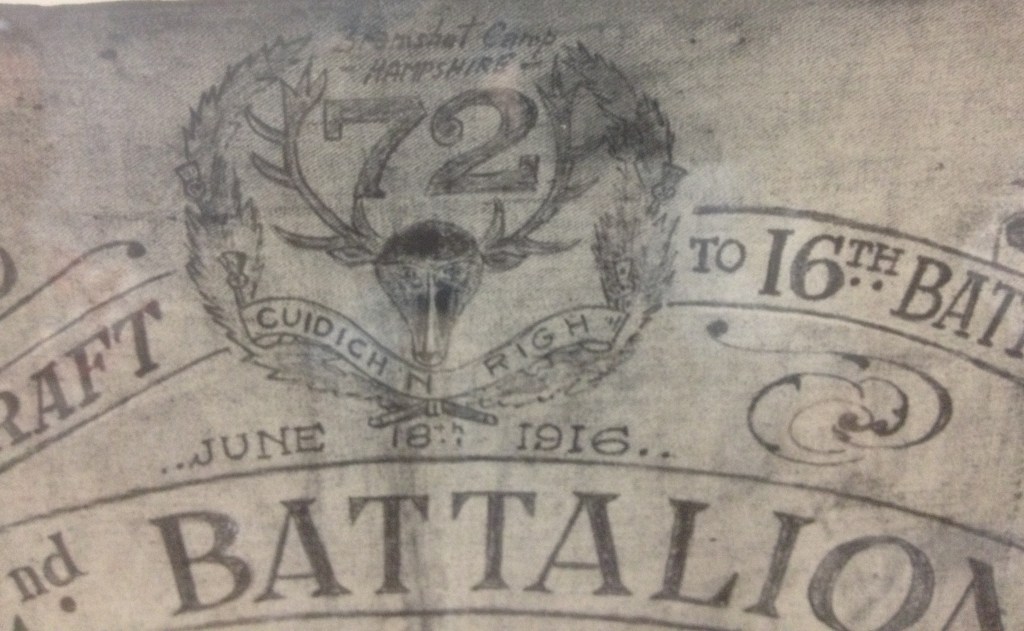
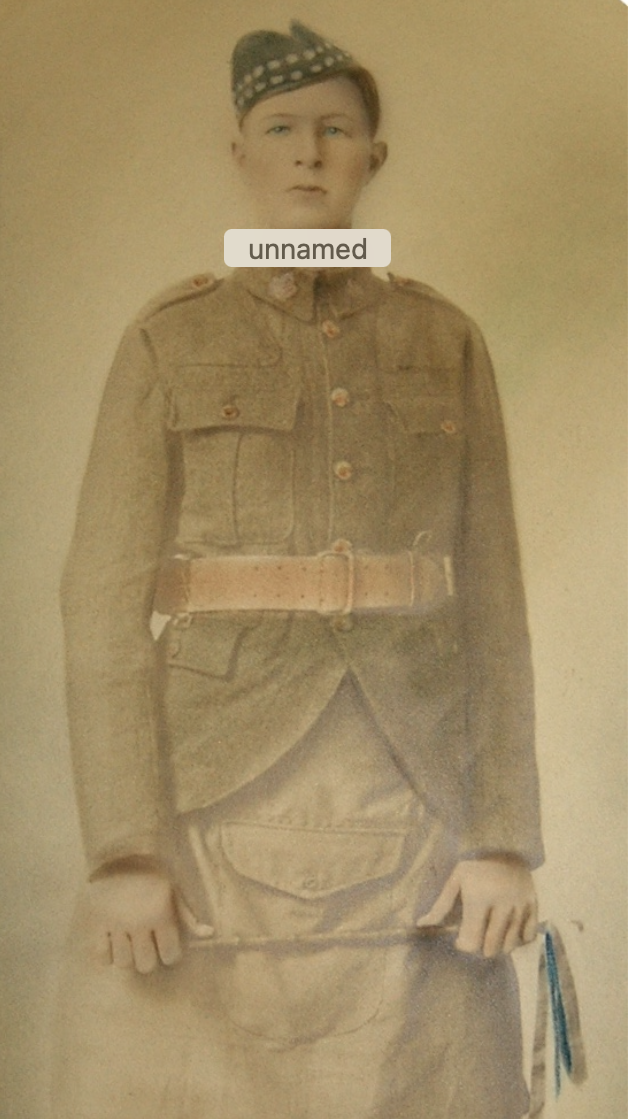
This journey started more than ten years ago, in August 2015, when I happened to come across a random online chat that referenced my great uncle, Arthur Forbes Ruddock. Looking back, this journey of discovery has unfolded very much like a book, developing in chapters, each building on the one before it.
At the time I was just beginning to have more than a casual interest in my uncle’s wartime experience with the 16th Battalion, Canadian Scottish, and his death at Vimy Ridge. I had long held a general interest in the First World War and knew that both my grandfather (on my father’s side) and my great uncle had served in the war — my grandfather had been wounded and lost an arm at Hill 70 and my great uncle was killed at Vimy Ridge. I had visited the Vimy Memorial with my father in 2009 and had located Forbes’s name on the Memorial, but at the time I didn’t feel any deep connection to him. It was only my general interest in the war that connected me to Forbes — and my interest in the 16th Battalion seemed to go hand-in-hand.
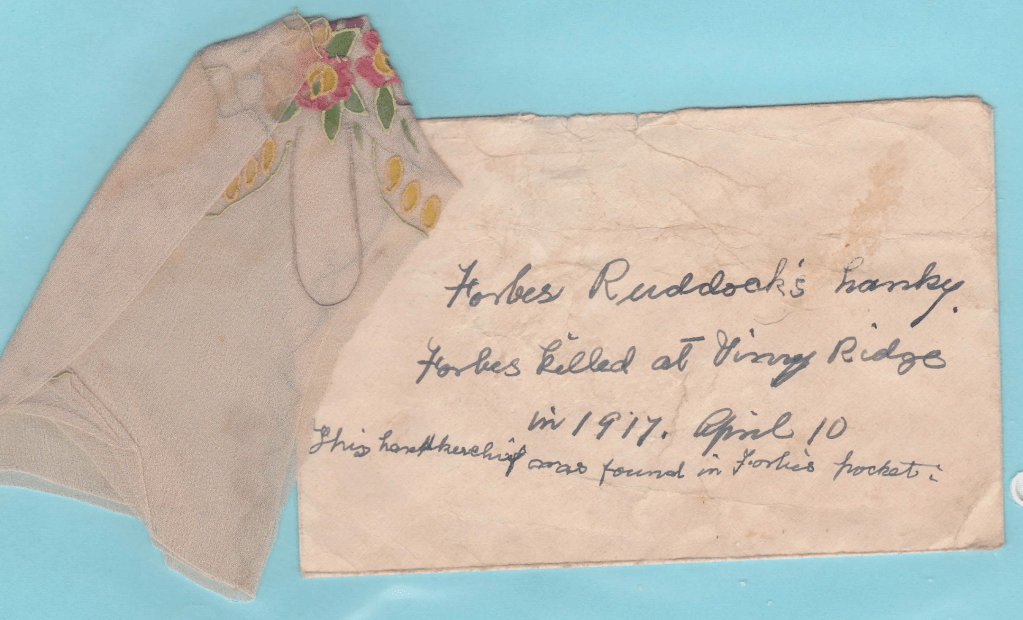
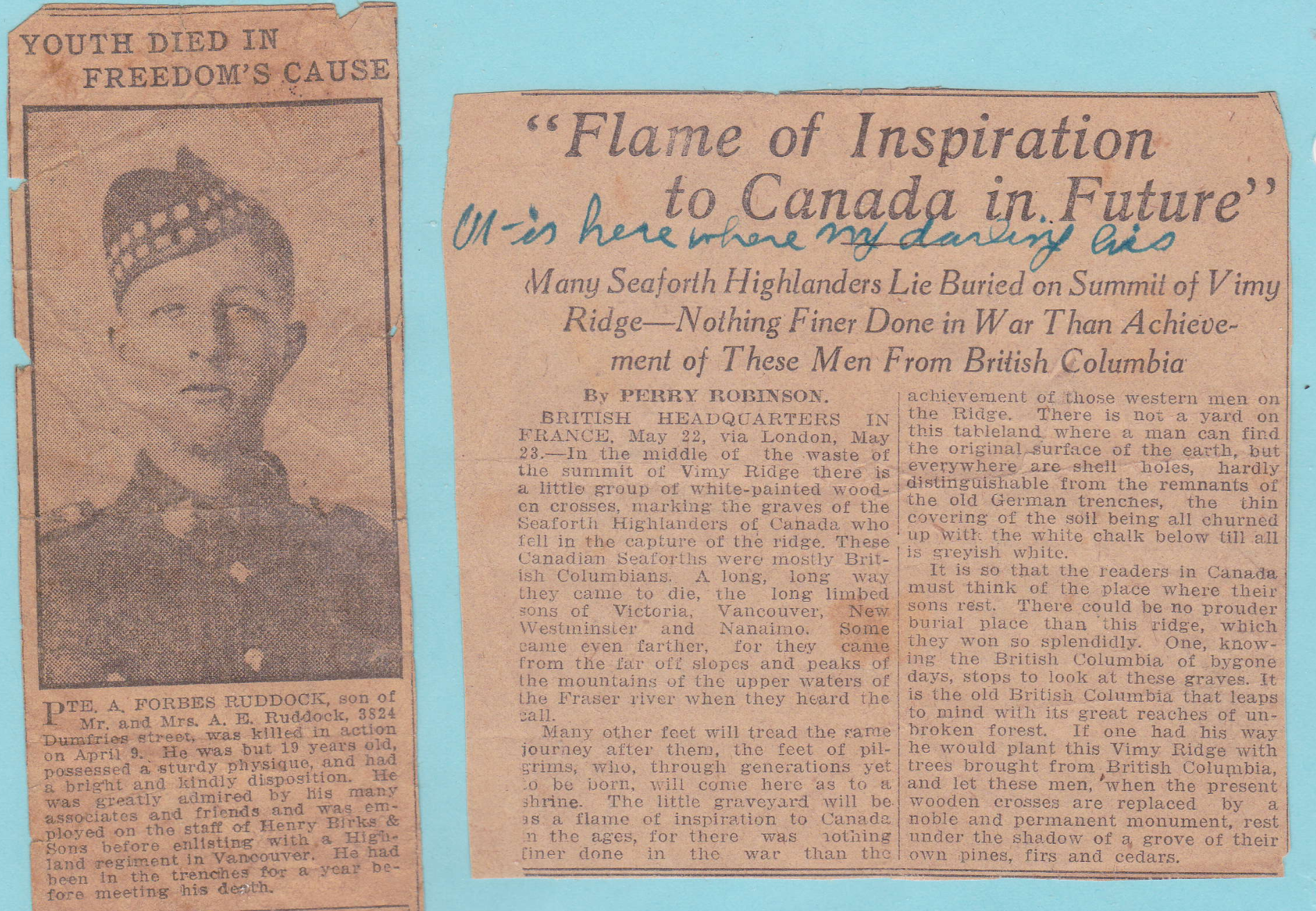
I sent an email to the person in the chat and was surprised to learn that she was a distant cousin, by marriage: her late husband was my second cousin. More surprisingly she had some personal items from Forbes that she was willing to send to me, including some newspaper clippings — one with a personal note on it. Of most significance, however, was a small piece of a handkerchief (hanky) — reportedly taken from Forbes’s body. The clippings and handkerchief had been handed down from her husband’s grandmother, Forbes’s aunt, who, I would later discover, had regular correspondence with Forbes while he was at the front.
While it was known to others, the handkerchief was the first clue for me that Forbes’s body had been recovered — and subsequently lost, as happened to so many bodies that had been buried in temporary battlefield cemeteries. The back-and-forth fighting, that included the area of Arras where Forbes had been killed, would have wreaked havoc and destroyed many of these graves.
As I learned more about the records of the Commonwealth War Graves Commission, and what was available online, it was clear that Forbes’s body had been found and buried in a temporary cemetery, CA.40. It was later reportedly moved to Nine Elms Cemetery as part of the consolidation of battlefield cemeteries, and it was during this move that his body was lost.
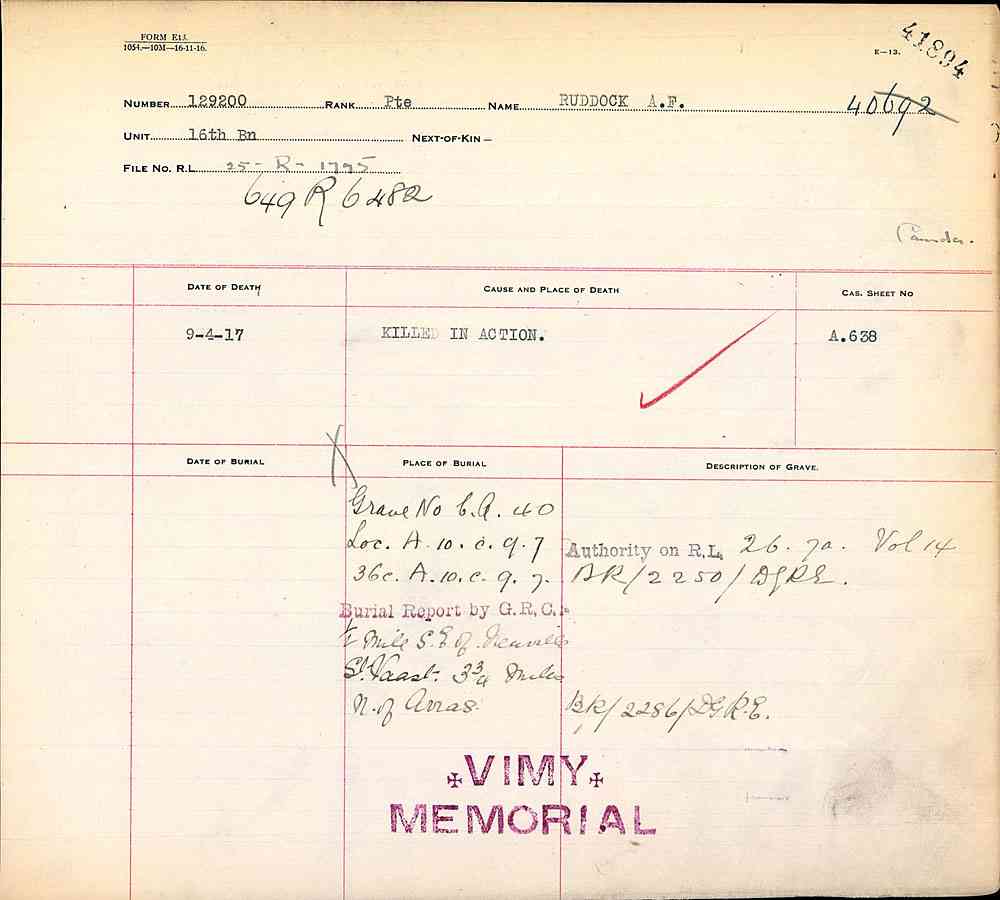
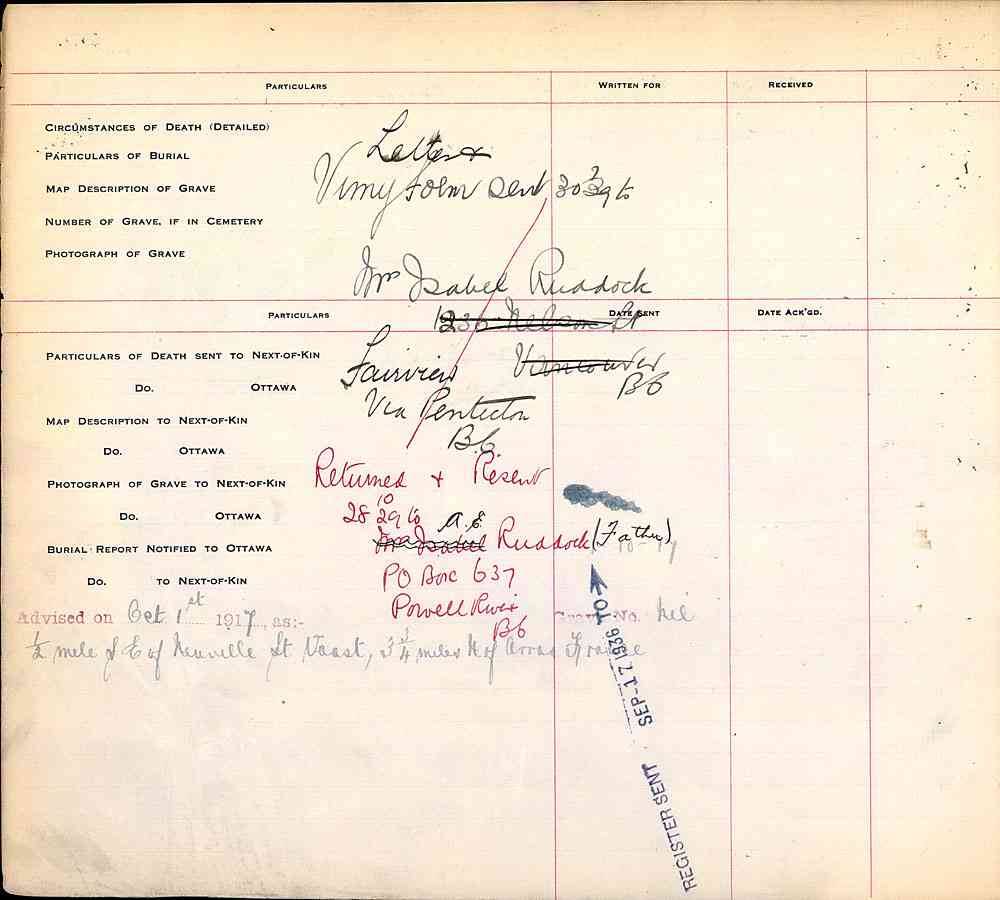
Receiving the newspaper clippings and handkerchief marked the beginning of what would become a passion — to understand Forbes, his wartime service and to develop a personal connection with him. Along the way I would be helped by strangers who already had a loose connection with him.
While the handkerchief and letters ignited this passion, it was admittedly a slow burn — until the spring of 2016 when the next chapter began to unfold.
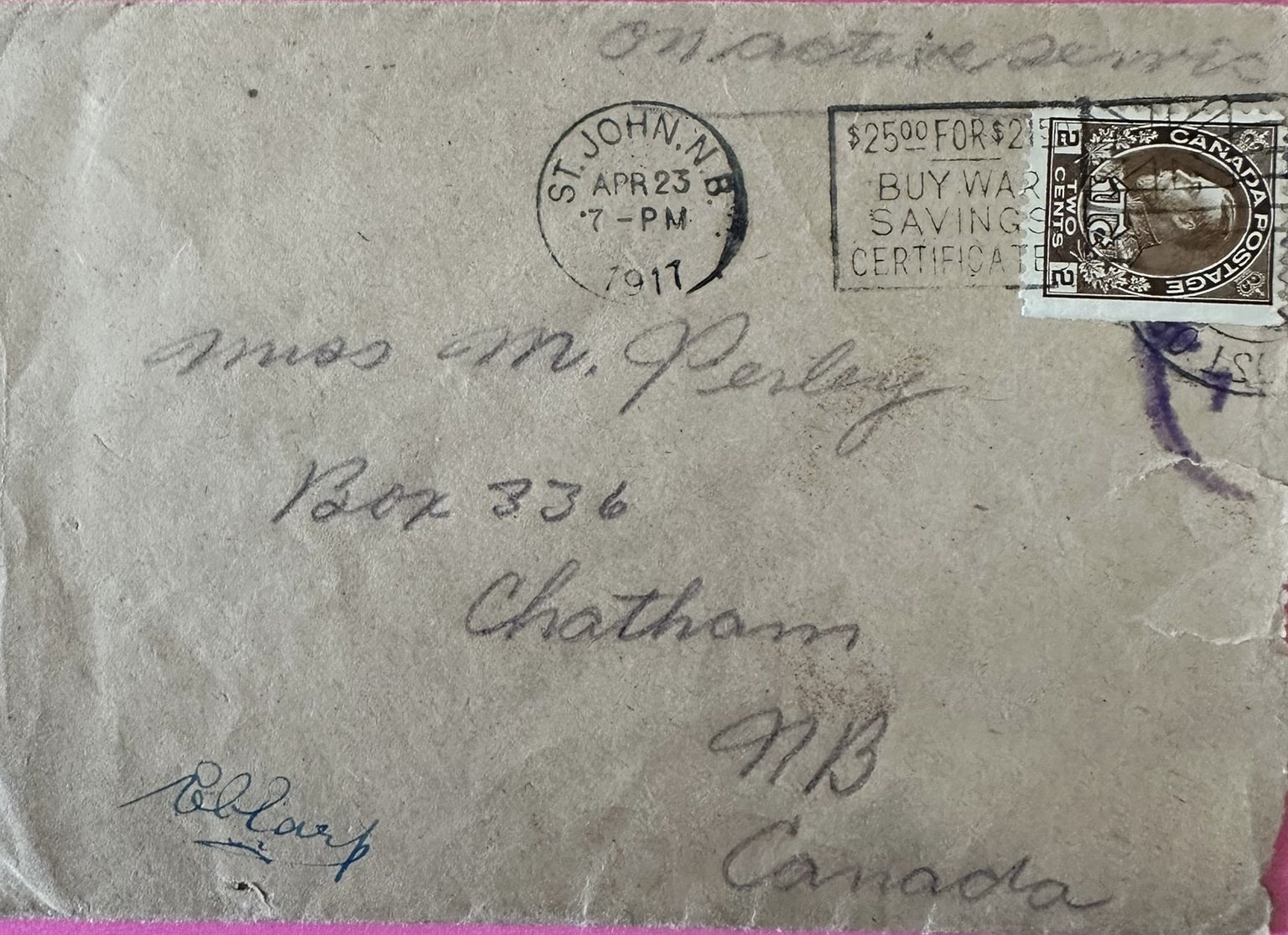
In April 2016 I received a comment from a stranger on a blog I had — an earlier version of “Perspectives on the Front”. The person was trying to track down a relative of Arthur Forbes Ruddock (#129200,16th Battalion, Canadian Scottish) and had come across a piece I had posted. He explained that he was an avid stamp collector and had an envelope addressed to Forbes Ruddock that he wanted to return to a relative. “Would I be interested in it?”
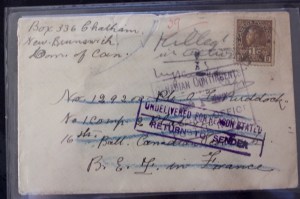
Despite my initial suspicion, I cautiously connected with him. True to his word, the envelope arrived a few days later. It was addressed to Forbes Ruddock, No. 1 Company, 2 Platoon, 16th Battalion, Canadian Scottish.
This one item — an envelope — allowed me to get much closer to Forbes and to trace him through the war. Knowing his company and platoon I could follow him through the battalion’s action at the front: following his movement through battalion diaries from the Ypres Salient to the Somme; the attack on Regina Trench and Courcelette; and ultimately Vimy Ridge.
I could also trace others in his company — the actions and orders of officers, men recognized for valour, and those killed and wounded. I could begin to understand what Forbes was experiencing.
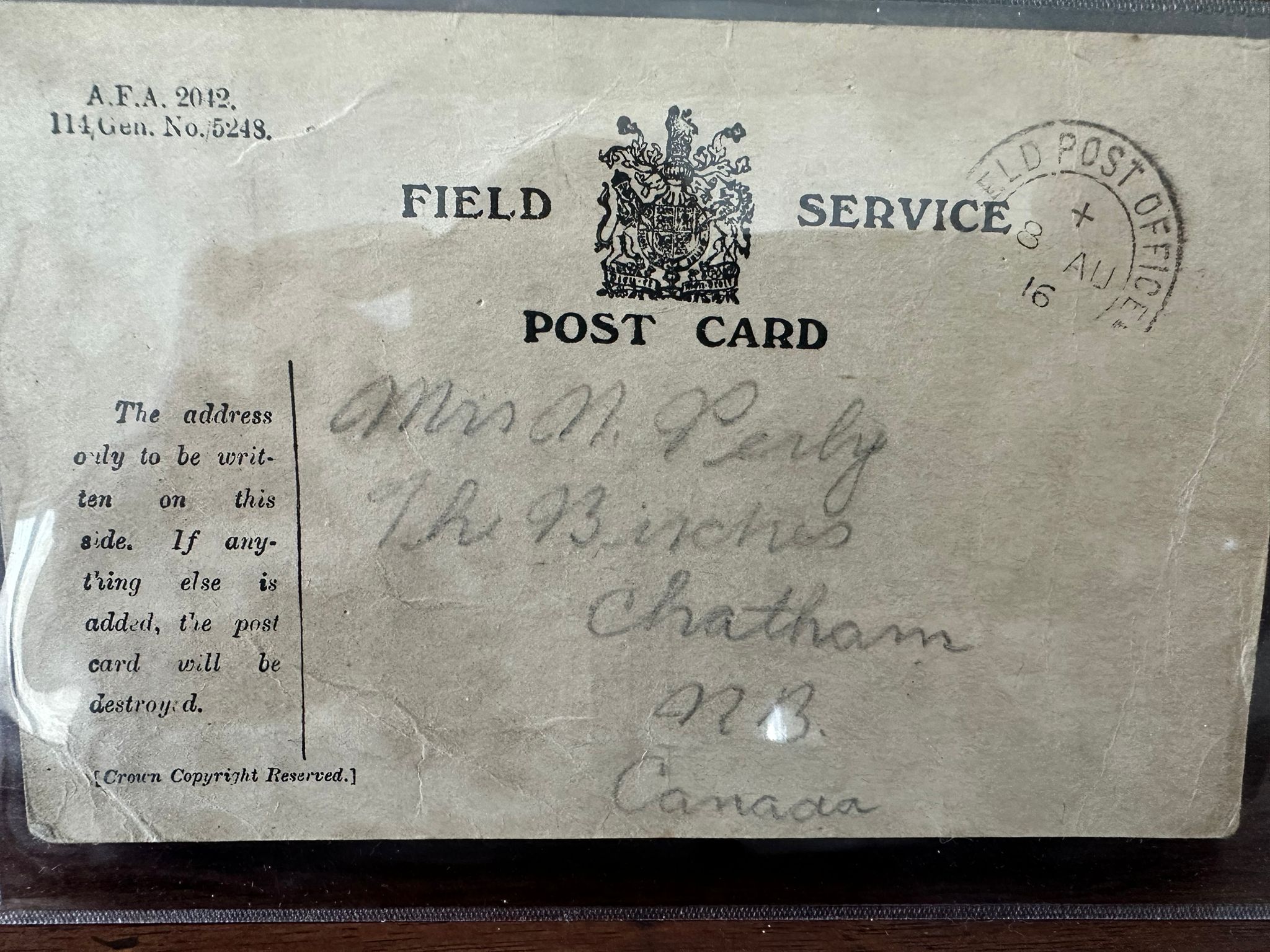
The envelope also had one other piece of interesting information on it: a return address. It was just a P.O. Box in Chatham, New Brunswick — Forbes’s hometown before his family moved to Vancouver in 1905 — but no name; the riddle as to the owner, would be solved in time.
And across the envelope was the stamp “Killed in Action”.

A short time after receiving Forbes’s envelope I unexpectedly received a phone call from Norm Christie, a prominent Canadian historian — one of the foremost historians on the First World War, and someone I had followed for many years but never met. He was working on a documentary about 44 men in the 16th Battalion who had been buried in a temporary battlefield cemetery — CA.40 — and were reportedly moved to Nine Elms Cemetery. Norm believed the men were never moved and were still in the original location, which he had painstakingly identified. One of those bodies was Forbes and he asked if I would participate in the documentary.
When Norm called, Forbes was not yet the centre of my interest in the war. I had what I considered archival pieces that connected me to him but I had yet to develop a personal connection. When asked in the documentary what I thought my reaction would be if we found Forbes’s body, I feigned interest, at best, but was largely nonchalant about a possible discovery.
Looking back, I believe the week with Norm filming the documentary in Arras and Vimy marked a turning point for me in my relationship to Forbes. While it didn’t happen overnight, tracing his final days with the 16th Battalion, walking through the field where he had likely been killed, standing at the spot where he may have been buried — where personal effects such as the handkerchief would have been removed — drew that connection much closer.
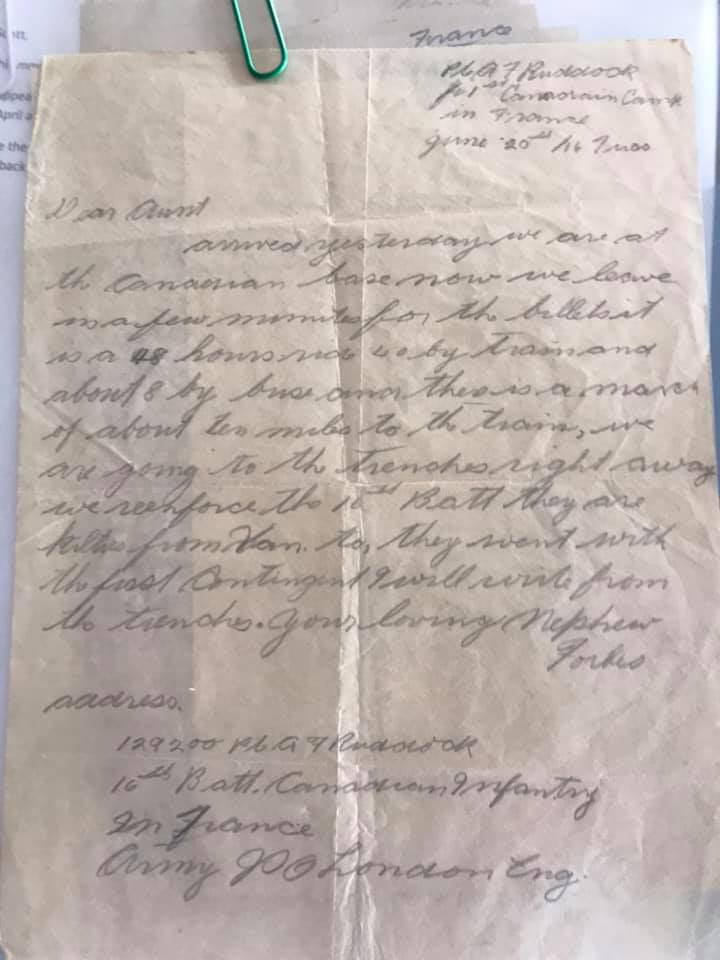
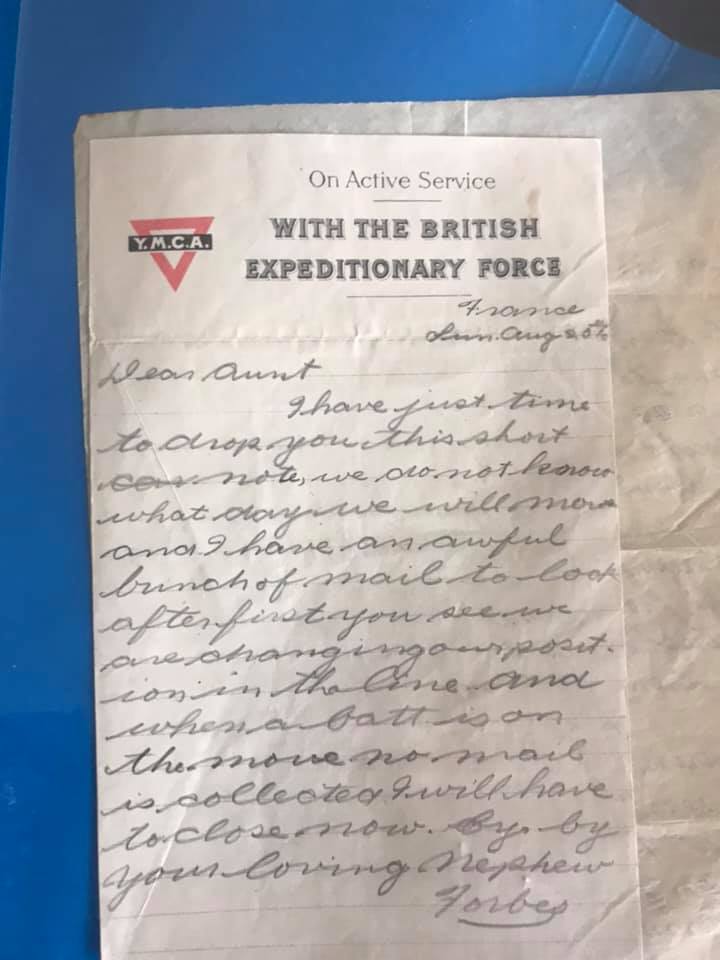
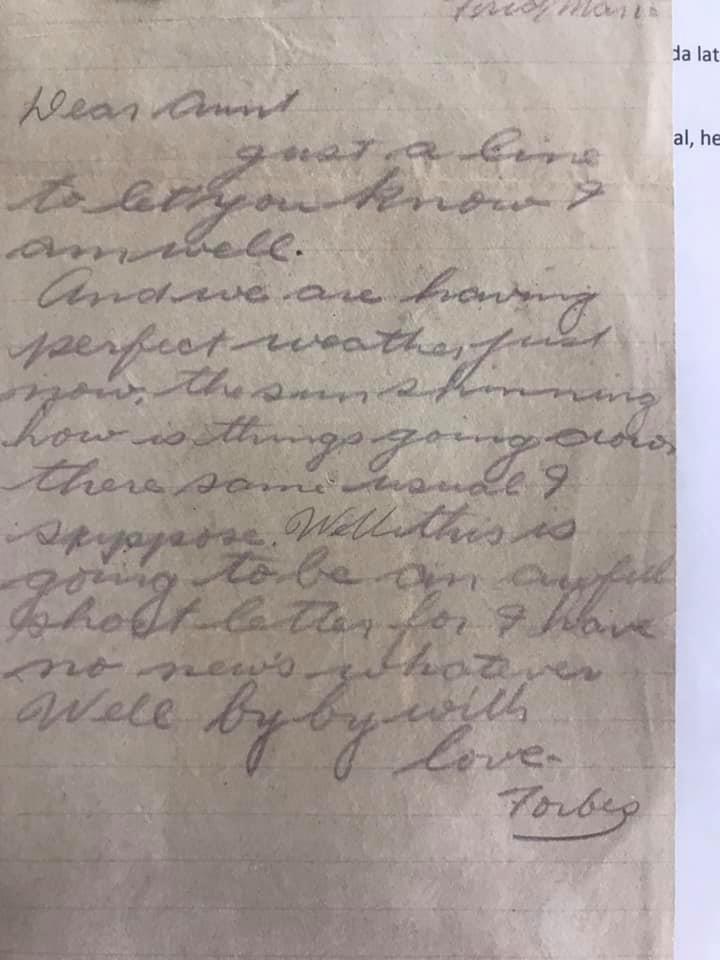
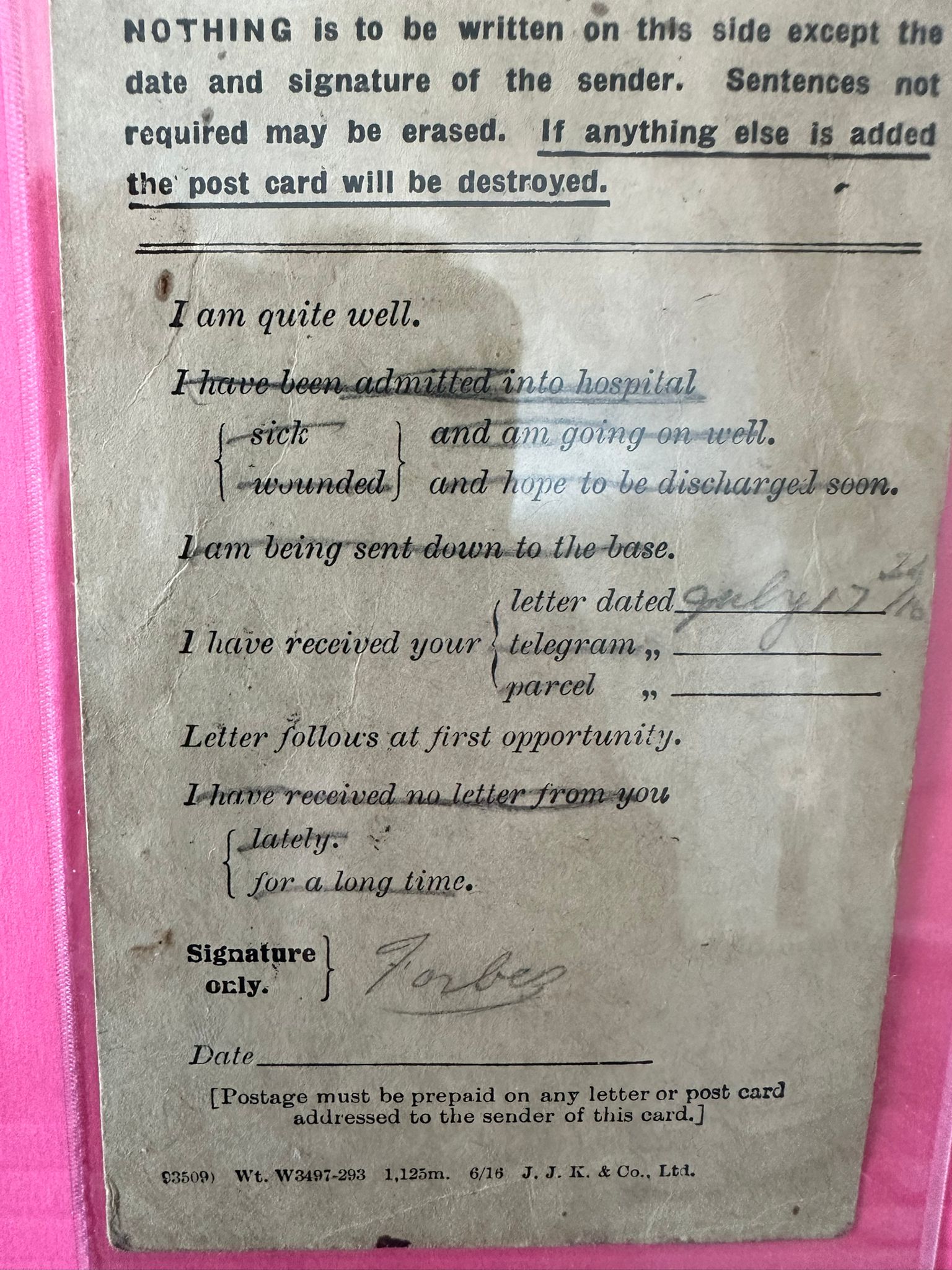
My professional life prevented me from delving much deeper into Forbes’s wartime experience or to expand the personal connection that was beginning to develop. But four years later I was contacted again by the gentleman who had sent me the original envelope. While cleaning out his collection he had come across additional correspondence from Forbes. This time it was not simply an envelope that he would send me, but a number of letters Forbes had written to his aunt in Chatham and his cousins — and the mystery of the P.O. Box was solved.
I was emotionally shaken when I received these letters. They arrived as the Covid pandemic was isolating us and fundamentally changing the pattern of our lives.
To read Forbes’s words — to see his writing at critical moments in his life: on the eve of joining the Canadian Scottish, and in the days immediately leading up to Vimy Ridge — was to hear his voice.
A complete stranger had given me something that no one else could: a direct connection to my great uncle.
Throughout this discovery I have often thought of my grandmother — Forbes’s younger sister. She had spoken of him many times and I regret not having paid closer attention. I remember a few of her stories, and in time I will capture them when I tell my uncle’s story more fully. I know, however, that she would have been absolutely amazed by the path this has taken, the things I have learned and the connections I have made.
When I received Forbes letters I didn’t have the time to read them closely and pay them the attention they deserved. The temporary reward was simply having them. I put them aside until I could look at them in detail and begin to tell a story that has now become a passion: and it seems now is that time.
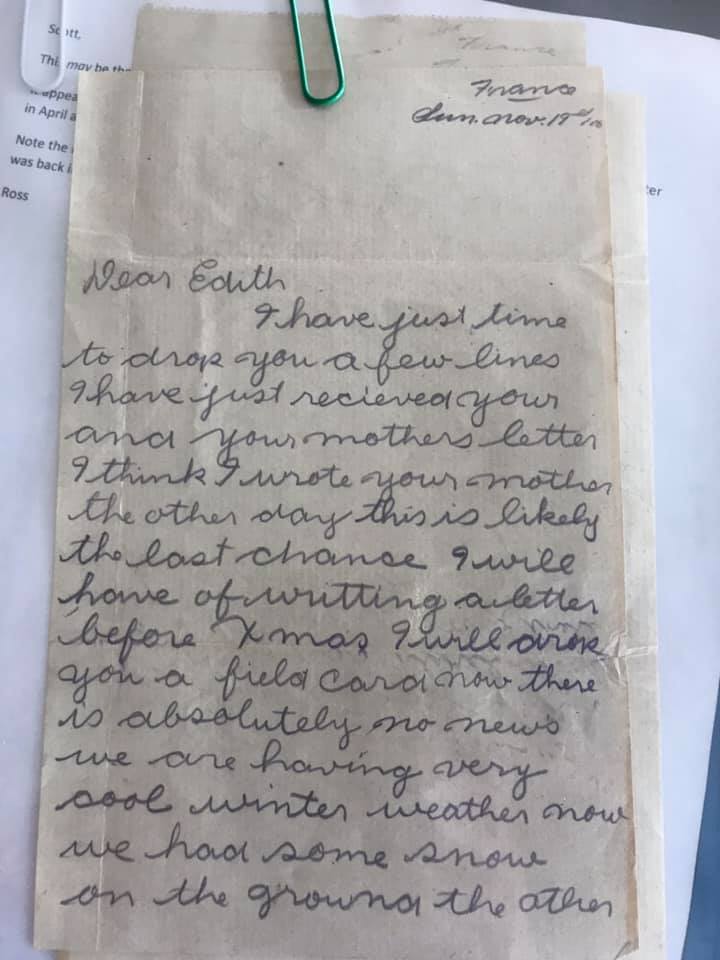
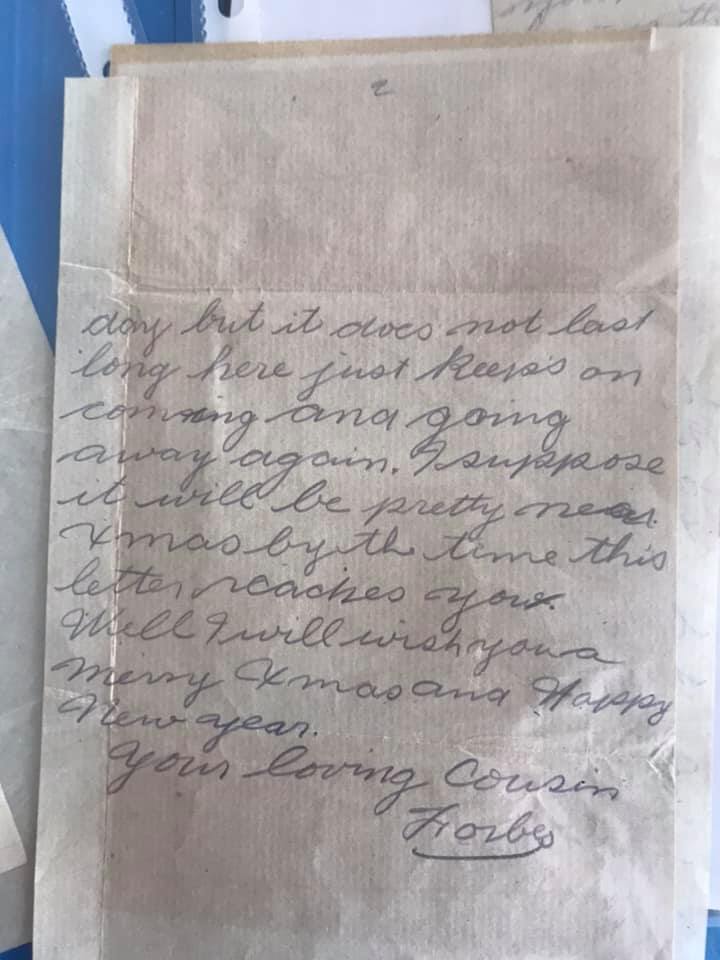
A letter to his cousin, Edith Gertrude Perley on November 18, 1916. At the time the 16th Battalion was in transition from the Somme, having come through the battles of Regina Trench, Flers Courcellette and Ancre Heights.
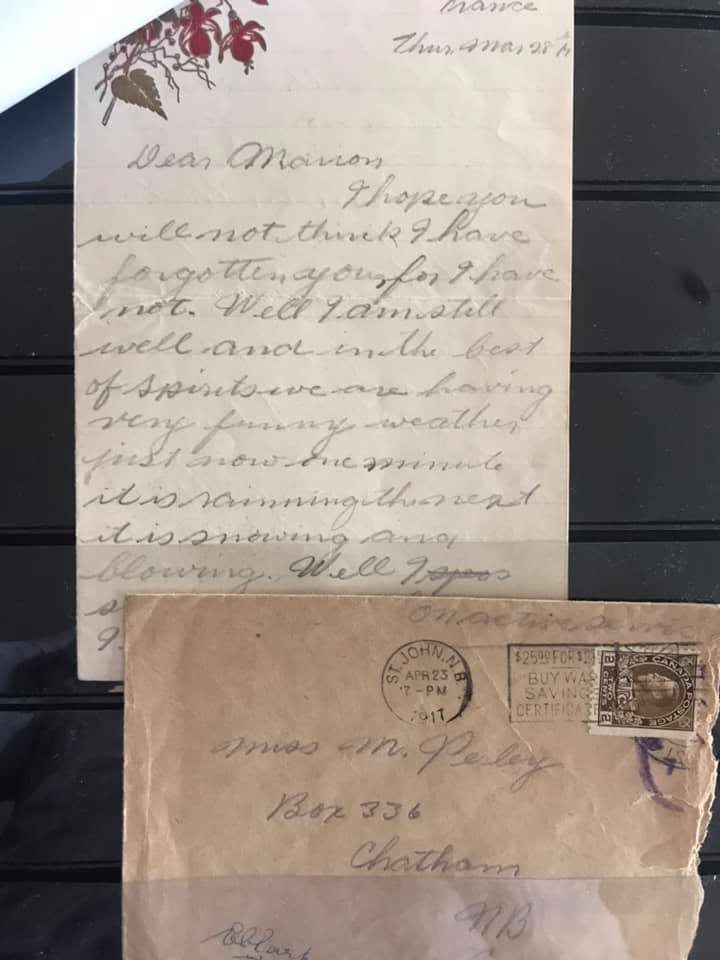
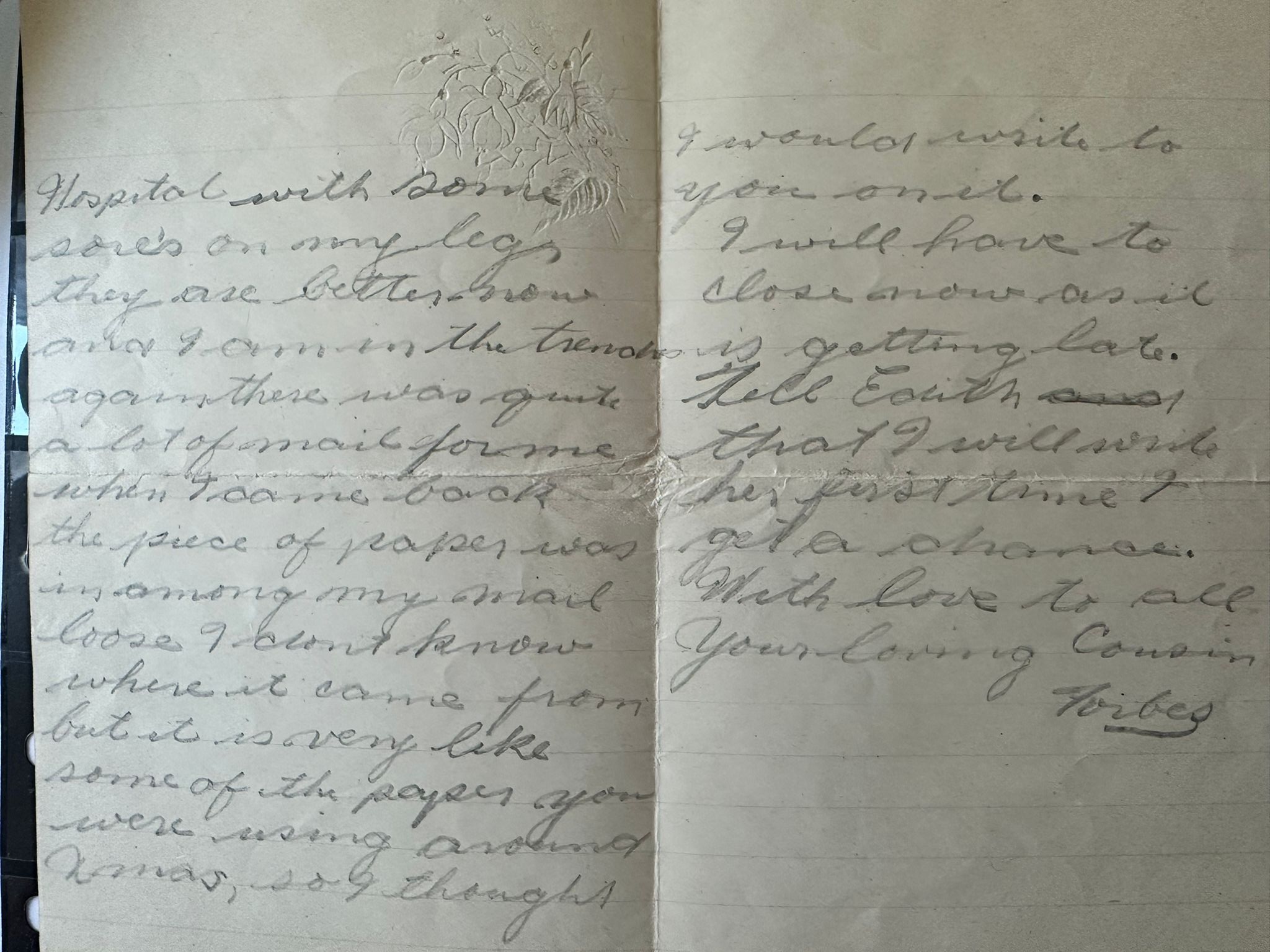
These are likely among the last letters to have been written by Forbes, to his cousin Marion Perley, two weeks before the attack on Vimy Ridge



 Perspectives On The Front
Leave a comment