There are so many stories to tell about life and lives at the Front. Despite the temptation to tell all there is, keeping the narrative to brief, short stories can be as much about focus as it is about the benefit of quick, snapshots of Life at the Front.
-
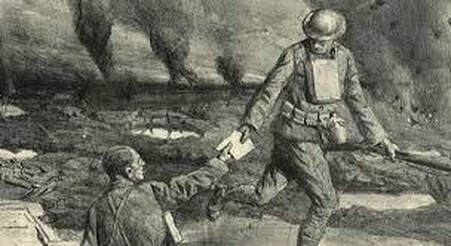
For many years, buried in the recesses of my mind, was a story my grandmother told me about her brother who served with the 16th Battalion, Canadian Scottish and who, she’d been told, was a runner in the battalion. Lacking evidence I remained skeptical. Recently, however, I came across a document in the Canadian Archives…
-
When you dig into the past you run the risk of finding things you may not want to know. . . it’s like asking a question to which you may not want the answer. Service Records are just one source of information about the men and women who served in the CEF. A good story…
-
This is a brief glimpse into the life of Private Robert George McDougall who enlisted to fight with a closed group of men – a university battalion – but brought with him a unique skill. Municipal railways in Canada were just coming into their fore in the early 1900’s but it was experience that made…
-
Canada did not move to the Somme until the end of the summer 1916, and while fighting in the Somme had been raging since July 1st, it was no less ferocious when the Canadians arrived. The battle for Regina Trench in October 1916 was devastating to the Canadian divisions. This is the brief story of…
-
The use of mines as a siege weapon in war goes back many centuries when tunnels were dug under castles, filled with explosives and used to breach the walls of the fortress. Ironically, it was the medieval nature of the First World War, with static defenses, many heavily fortified in the case of the Germans,…
-
It was a perfect spring morning with the temperature in the mid fifties when John MacKay, alias Tom Martin, showed up at the recruiting office to sign up with the 44th Battalion. He had chosen to enlist under an alias – as so many men did, perhaps avoiding the law, an employer or a girlfriend.…



 Perspectives On The Front