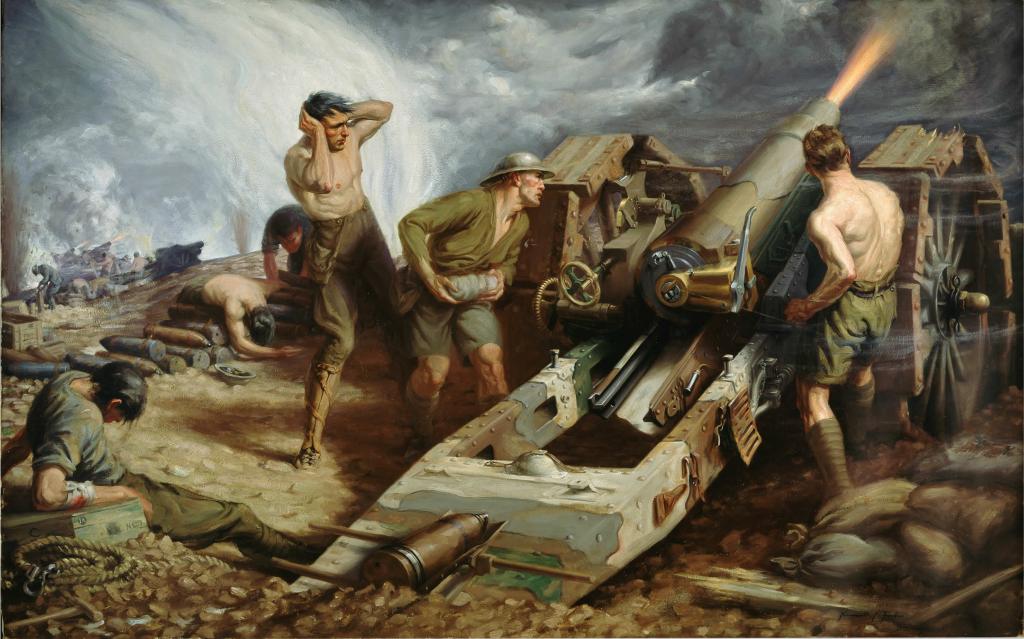

The Bombardier was a piece I wrote in 2009, before anything had been written about William Currin, and I thought now, with our relations with the United States probably the lowest they’ve ever been – certainly since the War of 1812 – might be the right time to touch it up and repost it.* It’s a story from a time when the United States and Canada were the closest of allies – when Americans had the courage of their convictions and enlisted in the Canadian Expeditionary Force to fight in the First World War. It is estimated that approximately 36,000 Americans joined the Canadian army to fight in the War.
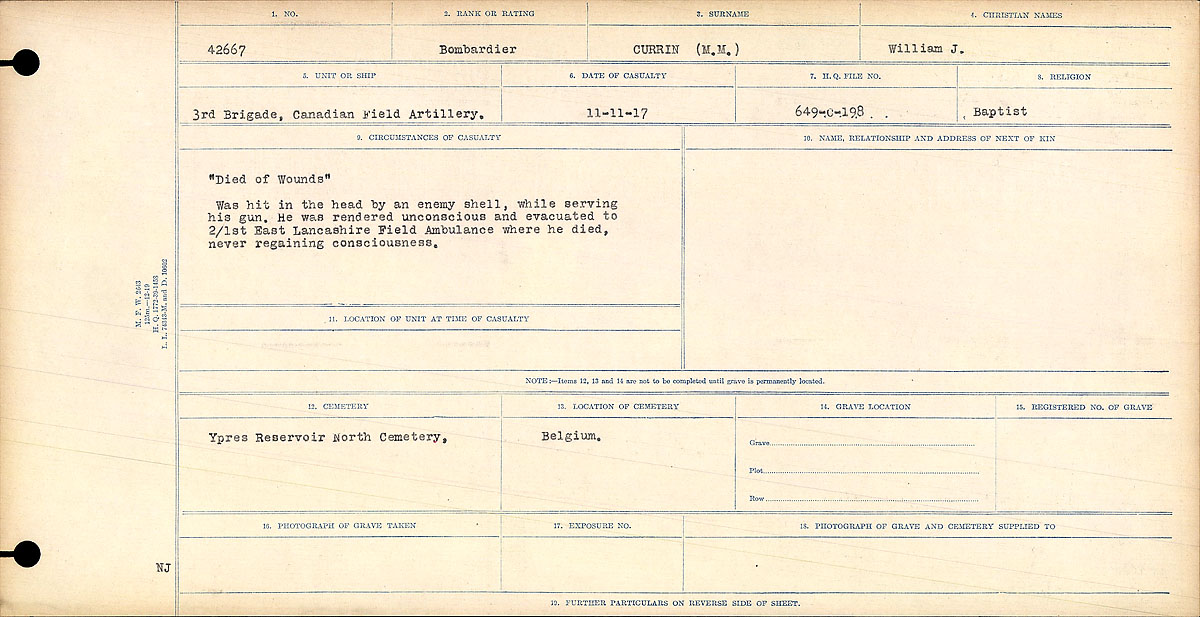
As I do when visiting The Front, I had taken a picture of many headstones, among them, William Currin’s in Ypres Reservoir cemetery. It is a beautiful grave in a quiet cemetery on the outskirts of Ypres, befitting a man with courage and passion. Returning to Canada I decided to learn more about William Currin – I had his name, his regimental number and the battalion with which he served, and from there I dug in to unveil more.
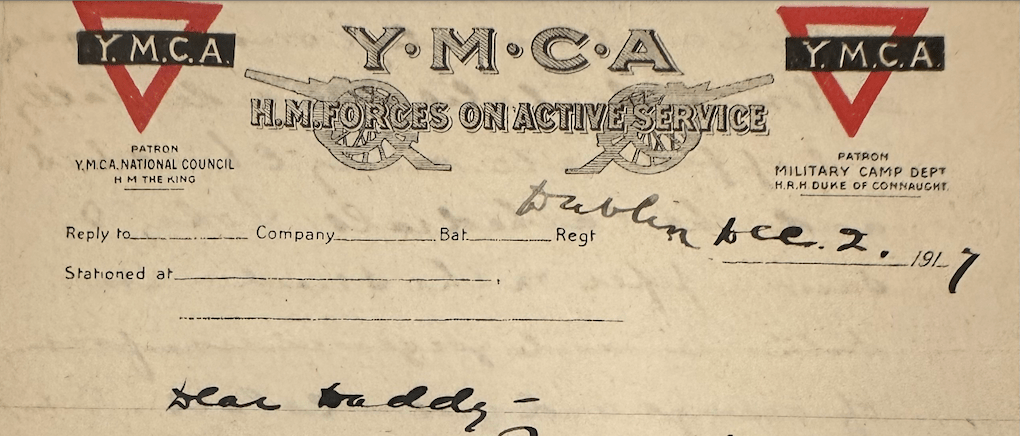
My initial steps were to look at his Attestation record from the Canadian Archives, as well as the battalion diaries from the day he was killed, the battalion reports from the battles leading up to that day, and also the Record of Citation for the medal he was awarded; his headstone showed that he had been awarded the Military Medal (posthumously). At the time of first writing, Library and Archives Canada (LAC) had not finished digitizing service records so I was missing an important part of any soldier’s story. I also came across some letters that Hike Currin had written to two lady-friends from Denison University (Edith Philbrook, Class of 1912; and Lilly Sefton, Class of 1911) that were being used in teaching a history course. At some point in the journey I also communicated with an archivist in Denison, Ohio where Currin went to university. It was the letters, however, that truly inspired me – they allowed me to absorb the persona of William “Hike” Currin and to write from a very personal perspective.
One of the rewarding things about researching past lives is having the opportunity to find and convey the story to a descendent of the person killed. With very little effort – the Internet is fun and scary that way – I tracked down and connected with the great great nephew of Hike Currin providing the picture of his uncle’s grave. He forwarded my note to his sister who, being a few years older and with better memories of her grandfather and family lore, was keenly interested in the story. She subsequently passed my note onto her aunt, who was the last Currin of Hike’s generation. My story, and the information I provided answered many of her questions and completed the story of a life untold.
Amy Currin Kunau thanked me for “honoring our uncle with your words, and for tracking us down.”
*Note: subsequent to my writing this in 2009, a fairly detailed piece was written and published in the publication of the Granville Historical Society recounting the short life of William J. Currin, using a number of the same letters that I used to understand his persona. This article fills in a number of gaps in the Hike Currin story in a similar perspective. You can find that a back issue of that article on the website of the Granville Historical Society. (https://www.granvillehistory.org/)
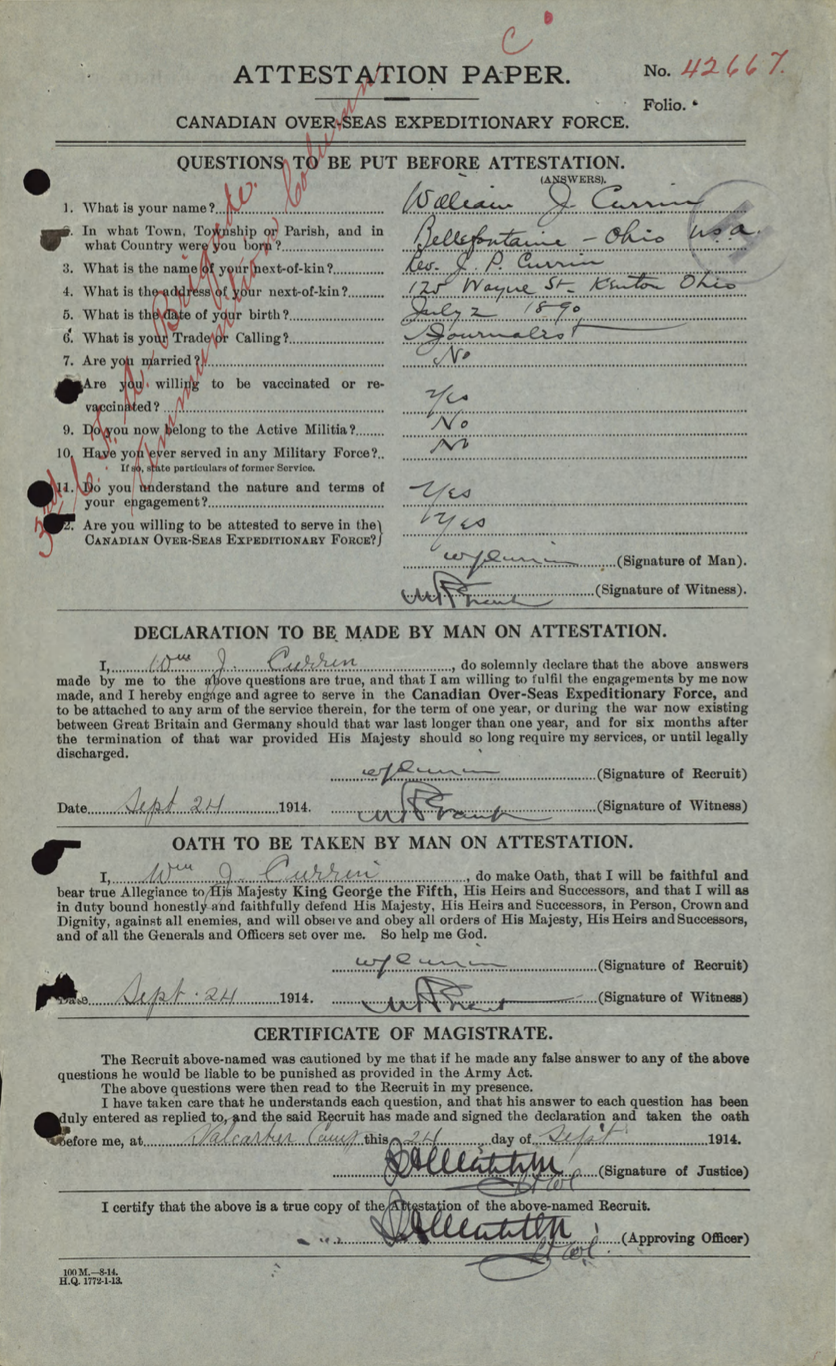
42667

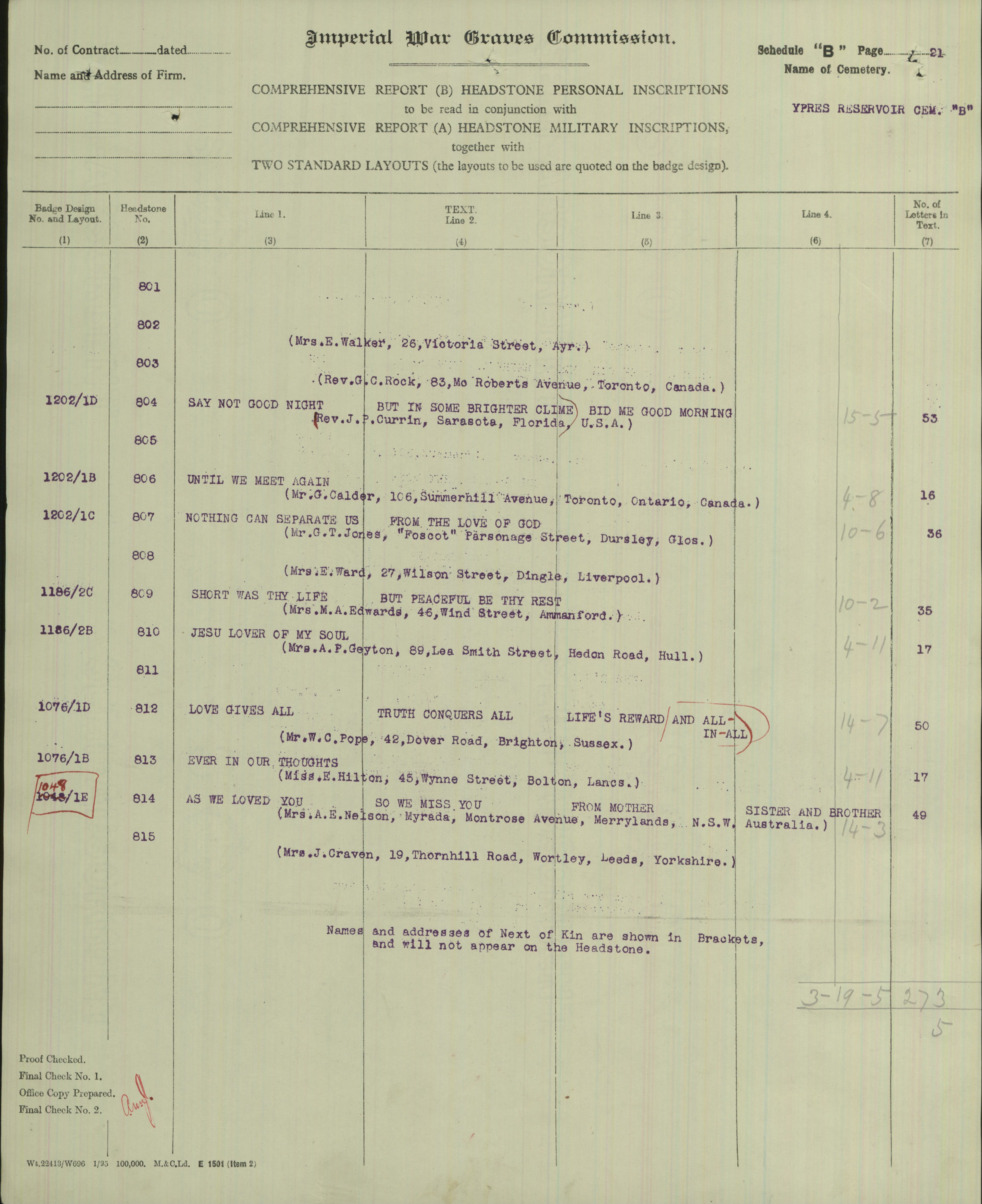
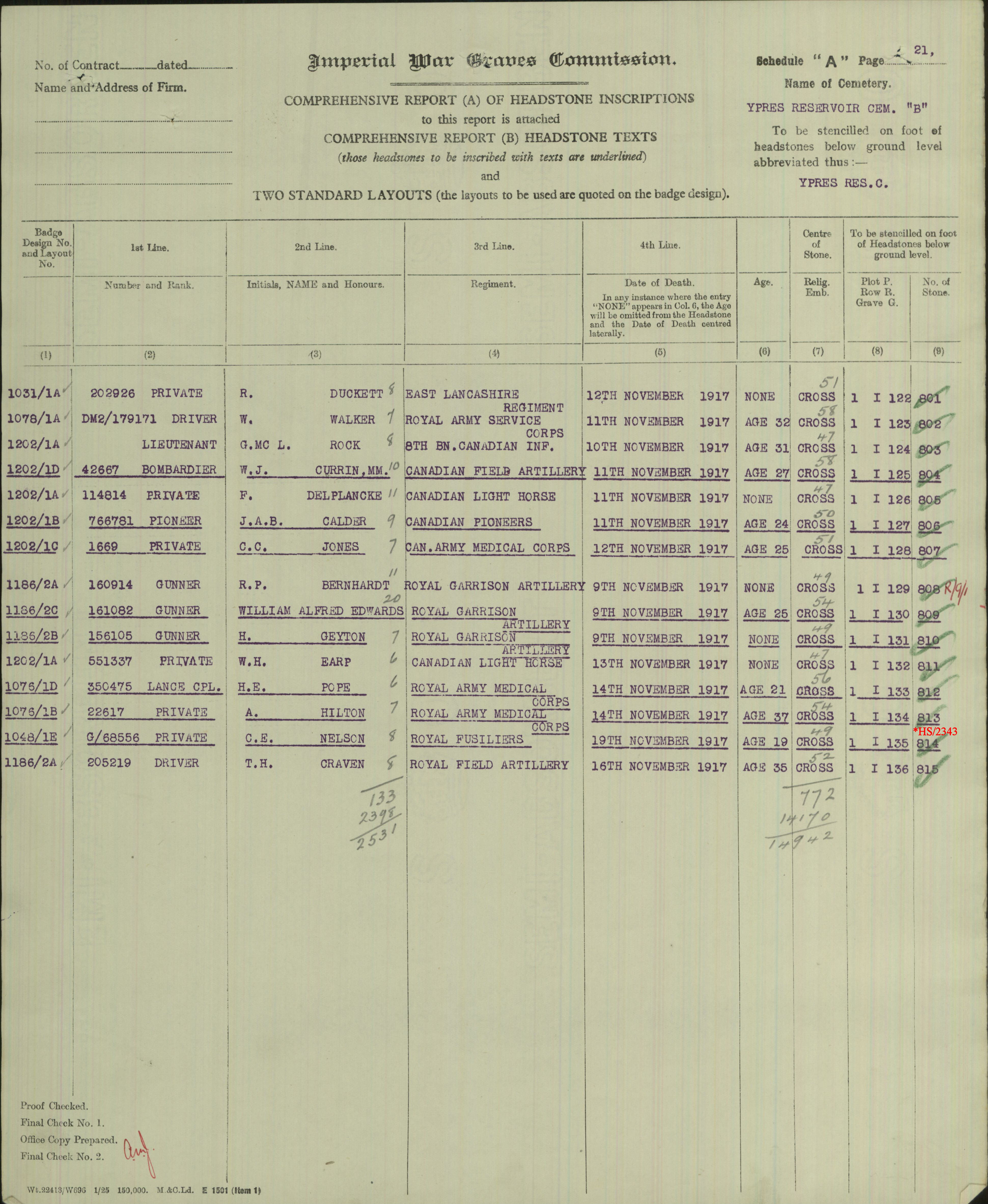

for Bombardier William Currin, 23-2-1918



Leave a comment